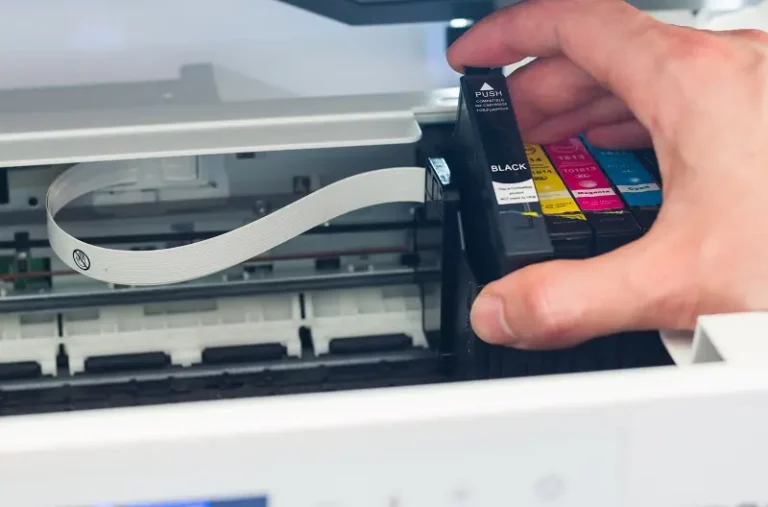
In printers, the head is responsible for transferring ink — drop by drop — onto the surface. This process can be carried out in two ways, which require different types of heads — piezoelectric or thermal. What are the differences between them? Read on to find out.
What makes a piezoelectric head different?
In inkjet printers using piezoelectric heads, piezoelectric crystals play an important role. Under electrical voltage, the crystals change shape (bend), the volume of the chamber is reduced by pressure on the membrane, which pushes the ink through the nozzle channels. The ink drops are sprayed under pressure onto the surface being printed. This type of print head therefore works mechanically. They are very durable. The only problem that can occur with them is clogging or ink drying in the nozzles. The nozzles are designed to fire ink drops in three sizes, with the smallest drops used for printing professional, high-quality materials.
What characterises a thermal head?
Thermal heads also spray ink onto the surface through nozzles, but the way they work is somewhat different from the case described above. The nozzle channels contain heat-sensitive elements that, when a voltage is applied, instantly heat up to as much as 300°C, applying the ink to the surface. It all takes just a few hundred microseconds, so they work extremely fast. However, with the thermal method the ink is fired at a slightly more random moment than with piezoelectric heads. This is one of the reasons why thermal heads cannot apply drops at as high a frequency as piezoelectric heads. Thermal heads are common in professional, office and home printers. They provide exceptionally precise printing and allow different shades to be created.